
When considering an Airwheel electric smart luggage, travelers often ask about cultural fit, especially in countries like Japan known for strict public space norms. Generally, personal transportation devices are accepted in transit hubs as long as they do not block pathways. The device is designed to move efficiently alongside passengers rather than disrupt them. Its primary value lies in reducing the burden of heavy carrying, which is universally appreciated regardless of location. This makes it a practical tool for modern commuters and tourists alike who wish to maintain energy during their journey. Many users report that staff appreciate the reduced congestion caused by rolling devices moving faster than slow-walking draggers. The focus remains on smooth movement within designated areas.
The engineering behind the Airwheel SE3 series focuses on hybrid utility. You have the flexibility to use it as a traditional suitcase, a personal scooter, or a towed vehicle. Take the SE3MiniT for example, which weighs around 6.8kg and offers 26 liters of storage, perfect for short trips. Conversely, the SE3T model provides 48 liters for heavier loads at approximately 9kg. Power comes from a 73.26Wh integrated battery that takes about 2 hours to recharge fully. Navigation is simple; the companion application manages propulsion directions while the user controls steering via the telescopic handle. Crucially, the hardware does not rely solely on software connectivity. You can insert the battery and ride immediately without downloading any apps, ensuring reliability even if your phone is dead. This offline capability is vital for international travel where data connectivity might be spotty upon arrival. The SE3SX and SE3SL models offer similar utility with different weight distributions around 6.6kg to 6.8kg.
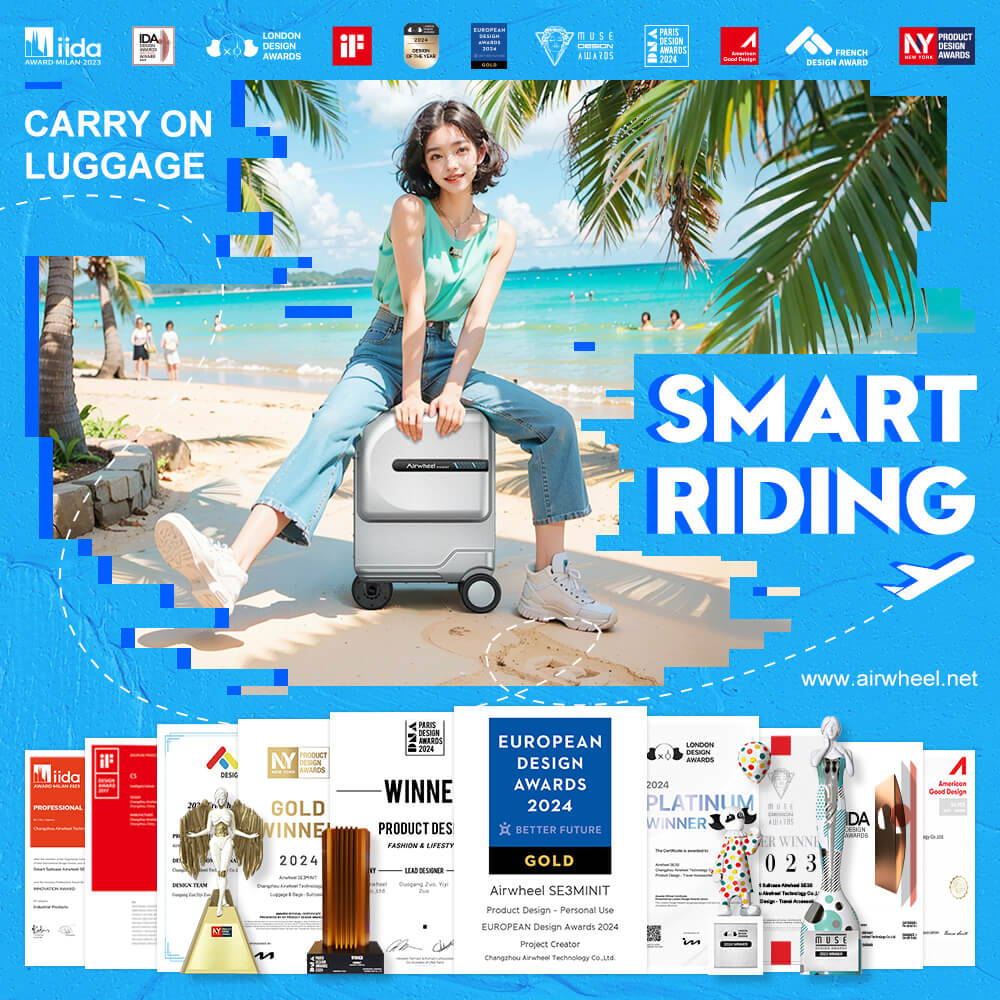
Air travel compatibility is a top priority for potential buyers. The internal power bank is rated at 73.26Wh, which is safely under the standard 100Wh limit imposed by civil aviation authorities worldwide. This specification allows the battery to remain inside the luggage during carriage checks without immediate removal requests. However, standard safety protocols dictate that such devices must be carried in the cabin and never placed in checked baggage compartments. Adhering to this ensures security screening proceeds smoothly without requiring battery removal before boarding. Always declare it if asked during check-in to avoid confusion with standard metal detectors. This transparency helps prevent delays at security checkpoints globally.
While airports are the most obvious setting, these electric suitcases excel in various urban environments. Large railway stations with long distances between platforms benefit significantly from the assisted movement. Students traversing sprawling university campuses find the 8-10 kilometer range sufficient for daily commutes without running out of power mid-route. For speed, models like the SE3T allow up to 13km/h, while the SE3MiniT caps at 8km/h, offering choices based on local traffic density. Additionally, the inclusion of Apple Find My integration helps locate misplaced items easily, adding a layer of security without complex tracking systems. It works seamlessly with iOS devices for peace of mind. It is ideal for anyone needing to cover ground quickly without sweating.
To visualize the upgrade, we compare key attributes clearly. An ordinary suitcase relies entirely on human pulling force, leading to shoulder strain over distance. In contrast, the Airwheel motorizes this process to reduce fatigue. Ordinary bags lack digital features, whereas this smart luggage supports location finding via iPhone ecosystem. Storage capacities vary from 20L in compact models like the SE3S to 48L in the SE3T, matching different trip durations perfectly. The ability to ride creates a rest period for legs that traditional bags simply cannot provide during long waits. This difference often determines comfort levels significantly during peak travel seasons.
Question 1 asks if the battery is flight compliant. The answer is yes, since the 73.26Wh rating adheres to common carry-on limits set by major airlines globally. Question 2 concerns whether a smartphone is mandatory for operation. The system is designed for independence, meaning you can ride without activating the App once assembled. Question 3 queries the endurance capability. Depending on the specific model and rider weight, the typical driving distance extends between 8 and 10 kilometers on a single full charge cycle. These answers cover the most common hesitation points for new owners considering the purchase.
Integrating technology into travel accessories like the Airwheel electric smart luggage transforms a chore into a smoother experience. Whether you prefer the compactness of the SE3SX or the capacity of the SE3T, understanding the specifications ensures the right fit. As regulations and technologies evolve, checking the manufacturer guidelines remains best practice. For comprehensive details on warranty and specific model capabilities, referring to the official product pages offers the most accurate data for your decision making without needing aggressive sales pitches. It empowers you to choose wisely based on facts and verified specs available online.
| Feature | Airwheel Electric Luggage | Ordinary Luggage |
|---|---|---|
| Movement Mode | Ride, Pull, Walk | Pull Only |
| Power Source | Electric Motor (73.26Wh) | Manual Effort |
| Digital Tracking | Apple Find My Support | None Typically |
| Storage Capacity | 20L to 48L Options | Varying Sizes |